
Todd Spencer: Fighting for America’s Owner-Operators
What does it really take to succeed as an owner operator?
We’re joined by Todd Spencer of OOIDA to discuss the realities of running a small trucking business, from managing costs and finding the right freight to navigating today’s market and deciding whether owning your own authority is the right move.
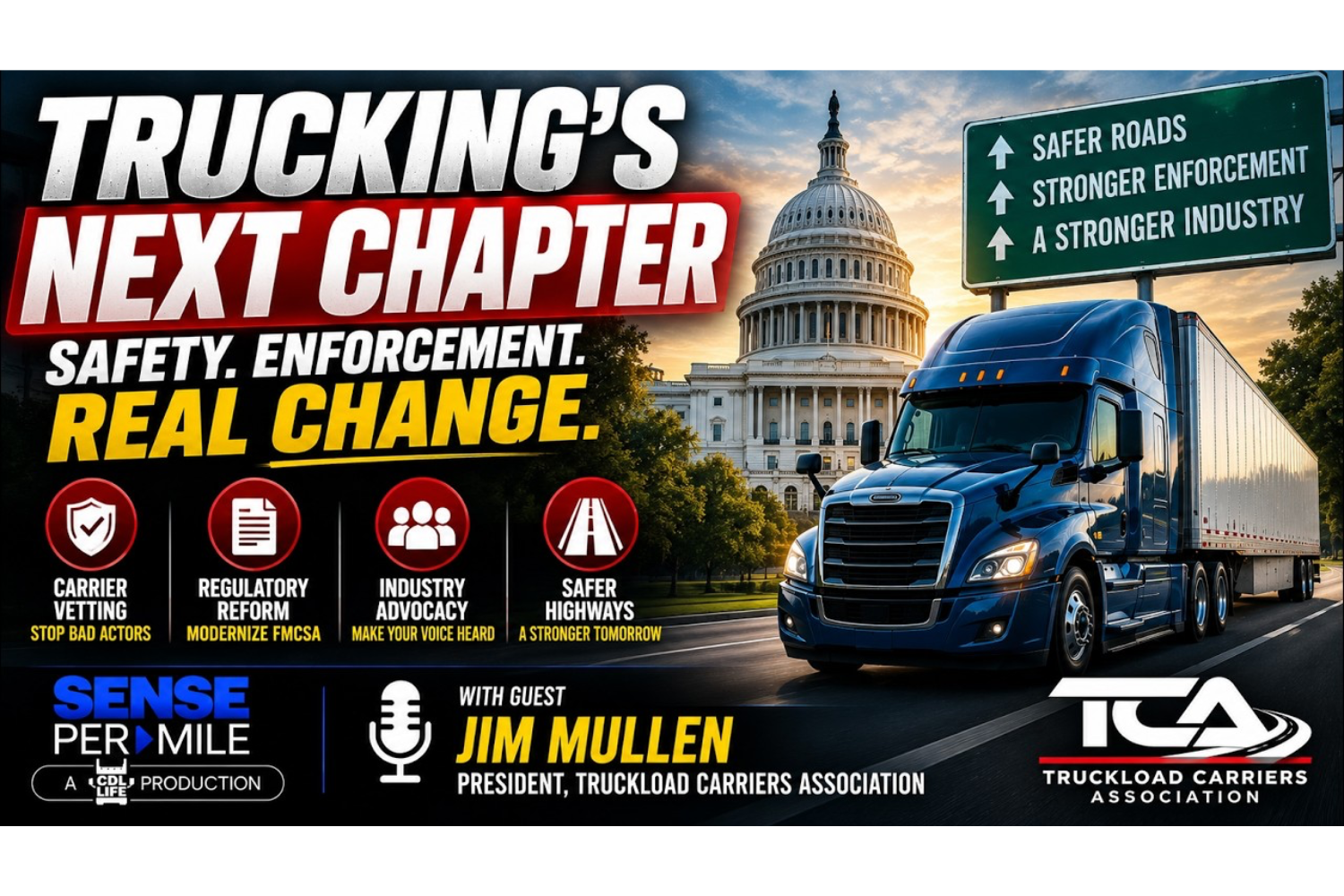
Jim Mullen: Call on Washington Review
Jim Mullen of TCA discusses trucking safety, FMCSA oversight, stronger enforcement, pre operational vetting and regulatory reform.

Crete: Long Term Vision Makes Short Term Decisions Easier
What does the road ahead look like for trucking? Tim Aschoff, President & COO of Crete Carrier, joins us to talk driver pay, freight, retention and what he sees coming next for the industry.

ELD: What does self certifying really produce?
Who’s watching the ELDs? Jeffrey Farrington, President of Assured Telematics, breaks down ELD self certification, oversight and the gaps that could let bad actors manipulate the system. A closer look at technology, compliance and accountability in trucking.
Trucking Needs High Quality Schools
What does it take to build the next generation of professional truck drivers?
Kevin Hall and Thom Albrecht sit down with Andrew Poliakoff, Executive Director of the Commercial Vehicle Training Association (CVTA), to talk training, standards, safety and what it really takes to prepare drivers for life on the road.
Because getting more drivers into trucking isn't enough.
We need better prepared drivers.

Trucking Legal Risks - Your Biggest Legal Questions Answered
Trucking’s Legal Landscape Is Changing
What does the post Montgomery environment mean for carriers and brokers? What can companies do to reduce legal exposure?
Bob Pleines joins Sense Per Mile to break down nuclear verdicts, carrier vetting, freight fraud, safety policies, litigation prep and the regulatory issues trucking needs to watch in 2026.

Why Trucking is Losing the Battle for Veteran Talent
What can trucking companies do to better recruit and retain veterans?
Brad Bentley, President of FASTPORT, joins Sense Per Mile to discuss veteran recruiting, the transition from military service to trucking careers, and how carriers can build stronger pathways for military talent.
The conversation covers veteran hiring, recruiting strategies, retention, and the skills veterans bring to the trucking industry.
A practical look at how carriers can strengthen their workforce and connect with one of the most valuable talent pools in trucking.

Focus on the Battles to Win the Driver Competition War
What does it take to recruit and retain quality truck drivers in today’s competitive market?
This episode of Sense Per Mile breaks down four key areas trucking companies need to focus on, from building a driver focused brand and improving response times to using recruiting data and creating an experience drivers want to stay for.
Get practical driver recruiting and retention strategies that carriers can put to work right away.

Its Halftime Already - Who Will Win the Game?
On Sense Per Mile, Thom Albrecht, Karen Smerchek, and Kevin Hall take a halftime look at one of the fastest-moving freight markets in years. From tightening capacity and rising rates to driver shortages, tariffs, regulatory enforcement, and AI adoption, the panel examines the biggest stories of the year and shares their predictions for what carriers, brokers, shippers, and drivers should expect in the months ahead.
Karen shares how Veriha Trucking prepared for a market recovery, why operations have shifted from "trying not to lose" to "playing to win," and why investing in new drivers through training academies remains a long-term advantage. Kevin discusses how fleets are adapting to increased driver demand, why technology and AI are becoming essential operational tools, and how companies that improved during the downturn are best positioned to capitalize on the recovery. Thom offers insight into freight rates, banking relationships, tariffs, broker liability, and several bold predictions that could shape the industry through 2027.

Driver Recruiting, A Competitive Advantage
Finding great drivers has never been harder—but the fleets that treat recruiting as a strategic advantage will win.
We dive into one of the trucking industry's biggest challenges: driver recruiting. From employer branding and driver retention to recruiting technology and compensation, the panel explores why the old recruiting playbook no longer works—and what successful fleets are doing differently.
The conversation examines how recruiting has shifted from simply filling seats to building long-term relationships with drivers, why retention deserves as much attention as hiring, and how carriers can create an experience that drivers actually want to be part of. The panel also discusses the growing role of AI, social media, incentives, and company culture in attracting the next generation of professional drivers.
CSA, ISS and SOL - Sense Per Mile
We’re joined by Reliance Partners' Director of DOT & Regulatory Compliance, Mark Barlar, for an in-depth discussion on trucking safety, CSA scores, compliance, and what carriers must do to stay ahead in today's evolving regulatory environment.

Building an AI-Ready Culture
Artificial intelligence is changing trucking faster than ever—but are fleets actually ready for it? In Episode 3 of Sense Per Mile Season 6, Kevin Hall, Karen Smerchek, and Thom Albrecht separate AI hype from real-world results. From recruiting and operations to pricing, customer service, and fleet management, the panel explores where AI is already creating value—and where human expertise still wins.

It's A New Sense Per Mile
In this season premiere, the trio dives into the freight cycle that defined the last four years — widely considered the most severe downturn since deregulation in 1980 — and what the current upswing means for carriers, brokers, and vendors navigating the road ahead. Karen shares the perspective of running a 200-truck family business through the storm, Thom breaks down what separates the winners from the losers, and Kevin reflects on what it looked like from the driver recruiting side as the market finally turned. The conversation covers the compounding regulatory changes reshaping the competitive landscape, why "cash is king" never goes out of style, and the one thing each host is watching most closely right now.

Is There A Super Cycle Forming?
In Episode 2 of Season 6 of Sense Per Mile, Kevin Hall, Karen Smerchek, and Thom Albrecht break down one of the biggest questions facing trucking today: What happens next as capacity tightens, regulations reshape the market, and carriers finally begin to regain pricing power?